

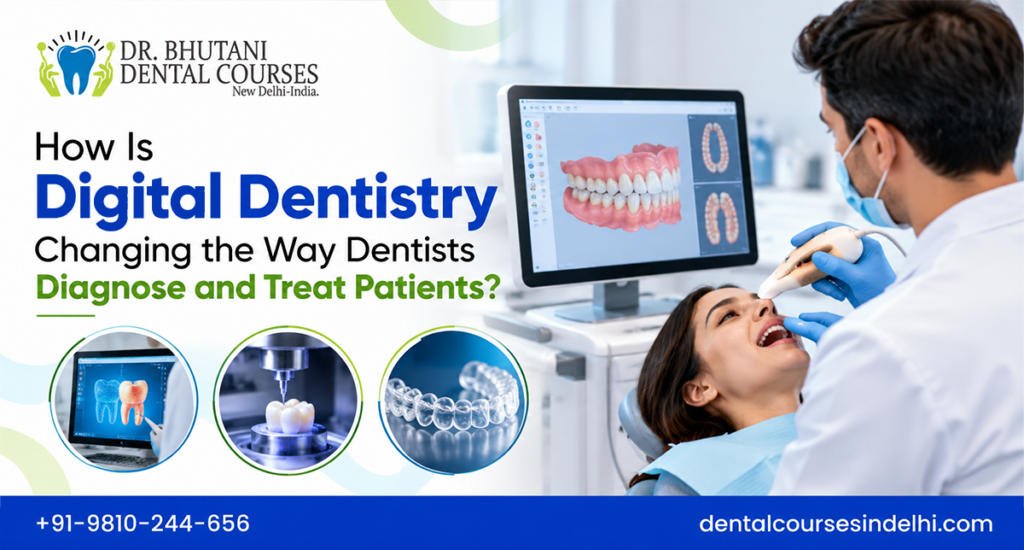
The use of technology is changing the ways dental practitioners examine, diagnose, and treat patients. Currently, technology in dentistry is making the transition from digital scans to computer-assisted treatment planning, further improving accuracy, efficiency, and communication with patients. A Digital Dentistry Course may aid dentists in comprehending these technologies and how they can be integrated into their day-to-day clinical practice.
While traditional dental practices are still significant, digital alternatives provide alternative methods for obtaining detailed information, planning procedures, and tracking treatment. The world of dentistry is constantly changing, and all professionals in the field need to be able to meet patient needs and emerging clinical demands by developing the competency of digital skills.
How Digital Dentistry Is Improving Diagnosis
Digital dentistry is helping with diagnosis.Proper diagnosis is key to successful dental care. Digital technologies help dentists capture and analyze the clinical data in an efficient manner and make informed decisions for every patient in accordance with their needs.
When discussing technologies used in modern dental practice, you’re probably thinking of digital radiography, intraoral scanners, or computer-based imaging systems. Digital radiographs can be displayed immediately, as can intraoral scanners, which can create detailed 3-D images of the teeth and other oral structures.
They can help the dentist identify problems, record medical information about the mouth, and explain information to patients. For example, a digital scan can be used to demonstrate how a patient’s dental health has improved over a certain period of time, misalignment, or tooth wear.
Digital tools are not a replacement for clinical judgement, however. It is important to the dentist that they interpret the results and select the diagnostic techniques for the patient and their clinical situation and symptoms.
Digital Dentistry Course Is a Crucial Course in the Era of Modern Dentistry
The Digital Dentistry Course aims to educate dentists about the new technologies and processes that are now a part of modern dentistry. This knowledge will help professionals use these systems in a meaningful manner and integrate them into their clinical practice.
The training could include intraoral scanning, digital impressions, computer-aided design and manufacturing (CAD/CAM), digital treatment planning, and use of imaging software, depending on the curriculum.
For example, traditional impressions may cause some discomfort for patients, especially those with a sensitive gag reflex. In appropriate cases, an intraoral scanner could be a more comfortable option and can also provide a digital record that can be used for treatment planning or in communication with the lab.
Additionally, digital workflows can facilitate communication and coordination between the dentist and dental lab, allowing for the seamless sharing of scans, reviewing the designs, and presenting specific requirements, which can all be easier.
Practitioners implementing these techniques will gain increased knowledge of the potential of digital technology for clinical accuracy, workflow, and patient experience.
How Digital Dentistry Is Transforming Dental Treatments
Digital dentistry is revolutionizing dental care.There are some areas of dental treatment that are being impacted by digital technology, such as restorative dentistry, orthodontics, implant planning, and prosthodontics.
In restorative dentistry, some restorations, such as inlays and crowns, can be created with the help of CAD/CAM systems by using a digital impression and computer-assisted procedures. This workflow can lower potentially multiple manual steps, depending on the equipment and clinical situation.
When it comes to implant dentistry, digital imaging and planning software can help dentists study anatomical structures and plan the position of the implants. If clinically indicated, digital planning can also be used to facilitate the utilization of surgical guides.
Digital scans and simulation software can also be extremely beneficial to orthodontists when they are able to see how the teeth will move during treatment. While these visualisations can help to make a patient’s understanding easier, the real result of the treatment relies on the clinical circumstances and compliance with the patient.
Digital records also allow dentists to capture the progress of treatment and track changes over time. But, in every procedure, a case-by-case analysis should be conducted to determine whether or not digital workflow is an appropriate solution.
The Role of an Advanced General Dentistry Course in Clinical Development
There is a growing role for digital tools, but dentists should also have a solid understanding of all aspects of dentistry so they can use them effectively. An Advanced General Dentistry Course can enhance the knowledge of dental practitioners in diagnosis, treatment planning, restorative dentistry, and comprehensive dental care.
It is helpful to have wider clinical expertise when making use of digital technologies in everyday practice. For example, the digital scan may reveal an issue with the relationship between teeth or the design of the restoration, but the dentist must still evaluate the bite, periodontal condition, any current restorations, and the general treatment requirements.
Technology is an important tool for making decisions, but dentists can also rely on their clinical knowledge and skills to make informed decisions.
If dentists are considering additional education, it’s important to choose courses that offer the right amount of theory, practical education, and knowledge of how digital systems can be used in different clinical situations. Some of the things to consider before joining a course are the curriculum, the equipment they have, the skills of the personnel, and the hands-on training provided.
Benefits to Be Gained from Digital Dentistry For : Patients and Dentists
Digital dentistry offers many benefits to both patients and dentists.
When the technology is selected and used appropriately, some benefits can be realized in a practical manner with digital dentistry.
- Enhanced visualisation: Digital images and scans can help dentists to better understand the structures of the oral cavity while communicating findings.
- Better patient communication: Visual treatment plans can be a helpful tool for patients to understand the treatments that are being recommended and what choices they have.
- Efficient clinical and laboratory procedures: Digital documentation and e-communication can support some of the clinical and lab procedures in a more efficient way.
- Improved documentation: Treatment is documented and monitored, and compared with stored scans and images during successive visits.
- Increased support for treatment planning: Digital tools can aid the dentist in determining various treatment options prior to starting selected treatment procedures.
Conclusion
Digital technology is changing the way dentists diagnose oral health issues, plan treatment, communicate with patients and manage clinical workflow. These technologies are enabling novel applications in patient understanding, accuracy and efficiency like digital scans and computer-assisted treatment planning.
A course in Digital Dentistry is a program designed for dentists to learn about the most up to date dental technologies and how they can use these technologies in their practice. Similarly, an Advanced General Dentistry Course can be used to reinforce the clinical foundation for good diagnosis and treatment planning.
Dr Bhutani Dental Courses is a platform that opens the doors to dental education and career growth, offering an opportunity for dental practitioners to explore further in their field and gain insights into modern dental care practices. Digital skills, used in conjunction with clinical judgment, will enable the dentists to adapt to the evolving needs of modern day dentistry.
Frequently Asked Questions (FAQs)
1. What is a Digital Dentistry Course?
A Digital Dentistry Course helps dentists understand modern dental technologies, including intraoral scanning, digital impressions, CAD/CAM systems, and computer-assisted treatment planning.
2. How is digital dentistry improving dental diagnosis?
Digital dentistry helps dentists capture and analyze detailed images and scans of oral structures. These tools support accurate assessment, treatment planning, patient communication, and monitoring of dental conditions.
3. What are the main benefits of digital dentistry for patients?
Digital dentistry can improve patient communication, provide more comfortable alternatives to conventional impressions in suitable cases, support efficient clinical workflows, and help patients understand their proposed treatments.
4. What is the role of an Advanced General Dentistry Course in modern dental practice?
An Advanced General Dentistry Course helps dentists strengthen their knowledge of diagnosis, treatment planning, restorative procedures, and comprehensive dental care, supporting informed clinical decisions when using modern dental technologies.
5. Who should consider enrolling in a Digital Dentistry Course?
Practising dentists and dental professionals who want to understand modern dental technologies, improve their digital workflow knowledge, and explore technology-assisted treatment planning can consider enrolling in a Digital Dentistry Course.


