
Introduction
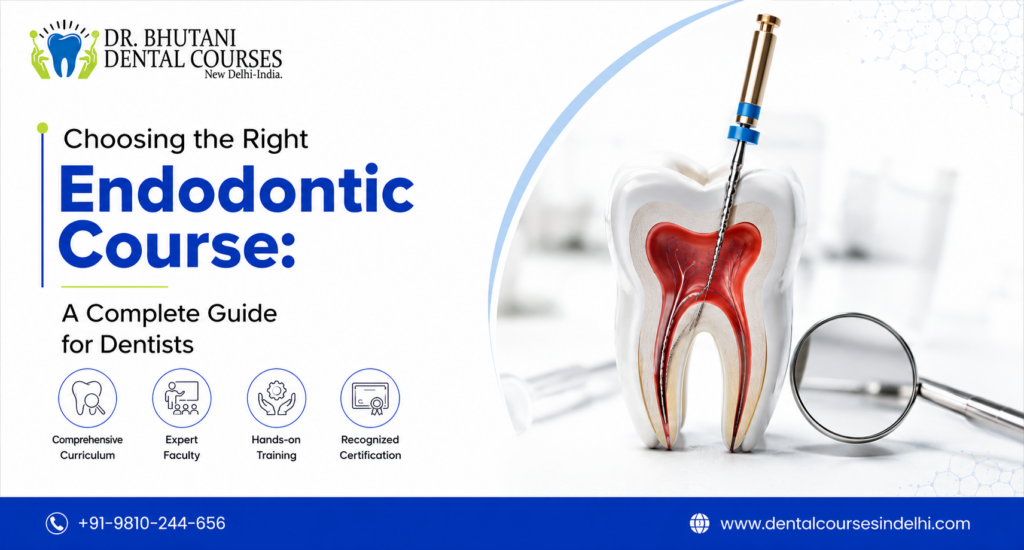
The modern day in dentistry keeps developing, and patients demand quicker, safer and more predictable root canal therapy. It takes more than clinical experience to meet these expectations; it takes continuous learning on your part as a dentist. Endodontic courses are meant to assist dental professionals to build their skill, enhance treatment outcomes, and remain competitive in today’s dental profession.
But, as there are many training courses out there, it may not be easy to pick the right course. Some are more theory based and others more learning based. To be able to choose a program that is truly in your best interest in advancing your career and your confidence while at the bedside, you need to know what to expect.
Why the Selection of the Right Endodontic Course Is of Paramount Importance
When it comes to the choice of the right endodontic course, it is of great significance.
Many training programs provide different types of education and clinical experience. A well planned endodontic course supplies you with the knowledge and hands-on experience to deal with various root canal cases confidently.
During practical training, dentists will gain insight into canal anatomy, enhance diagnoses, master rotary instrumentation, and master modern obturation techniques. Quality courses are more important because they minimize the number of common treatment mistakes and enhance long-term patient results.
Advanced training also can build patient confidence, broaden your practice, and provide additional career paths in specialty practices or private practice.
Factors to Consider Before Enrolling
There are some factors to consider before enroling.
When taking a look at endodontic courses, there are a number of factors to take into account besides the course price and length. Seek courses that have a combination of theory and clinical work.
Hands-On Clinical Training
Patient experience is one of the best things in professional dental education. Courses with supervised clinical training sessions allow participants to become confident in the use of contemporary endodontic techniques.
Experienced Faculty
The benefits to learning from experienced endodontists are real-world lessons that can’t be found in a book. Experienced instructors with many clinical cases can take participants through difficult cases and demonstrate techniques that they employ in their routine practice.
Updated Curriculum
Dentistry is ever evolving. Select courses that include the latest technologies (rotary endodontics, apex locators, digital radiography, magnification systems, irrigation protocols and advanced obturation techniques).
Small Batch Learning
Smaller classes provide individual guidance, feedback, and interaction with instructors in practical classes.
Certification and Reputation
Choose a school that has good ratings and reviews from students, and is recognized in the industry. A highly recognized certificate can enhance your job profile and show your dedication to ongoing learning.
The Impact of Endodontic Courses on Clinical Practice
The advantages of the right training program are far greater than certification.
A dentist who has gone through advanced education in Endodontics is likely to be more confident in their dealing with complex cases. The ability to locate hard canals with better diagnostic skills and the use of better instrumentation techniques to minimize procedural errors and treatment time.
Patients also enjoy increased treatment efficacy, greater comfort and more predictable outcomes. When patients are satisfied, word-of-mouth often takes hold, and so will the practice. If patients are happy, referrals and practice growth will likely follow.
Moreover, ongoing education shows a commitment to excellence, contributing to dental practitioners gaining greater credence within the dental community.
Common Errors Students May Make When Choosing a Course
Some frequent errors that students may make when selecting a course are listed below.
A few dentists may opt for a course because of its ease of access or cost. These are important considerations, but not more important than the quality of education.
Do not sign up for programs with little clinical experience and/or outdated instructors. A course that has no hands-on experience may not give sufficient practice to enhance one’s daily clinical performance.
Additionally, it’s crucial to investigate the school’s standing, professors’ credentials, student evaluations, and learning materials before choosing a school.
Lastly, decide if there are mentoring or ongoing learning programs offered after the courses. Continuous supervision is very useful in the application of new techniques in clinical practice.
Conclusion
Choosing the right Endodontic Courses can have a significant impact on your professional development and clinical success. A comprehensive program that includes cutting-edge treatment methods, hands-on experience, and expert instruction allows dentists to improve their skills and provide better treatment for their patients.
Consider the quality of training, the experience of faculty and opportunities for practical training rather than just its length or price. Quality education now can result in enhanced self-esteem, better care, and better career prospects.
Call To Action
Looking to take your endodontic skills to the next level? Learn about professional Endodontic Courses that offer in-depth clinical instruction and practical experience. Explore the programs offered at Dr Bhutani Dental Courses and start your journey to achieving greater success in your dental career.